
Science Made Simple: Dr. Ben Stanger on the Advances Bringing New Hope to Pancreatic Cancer Research
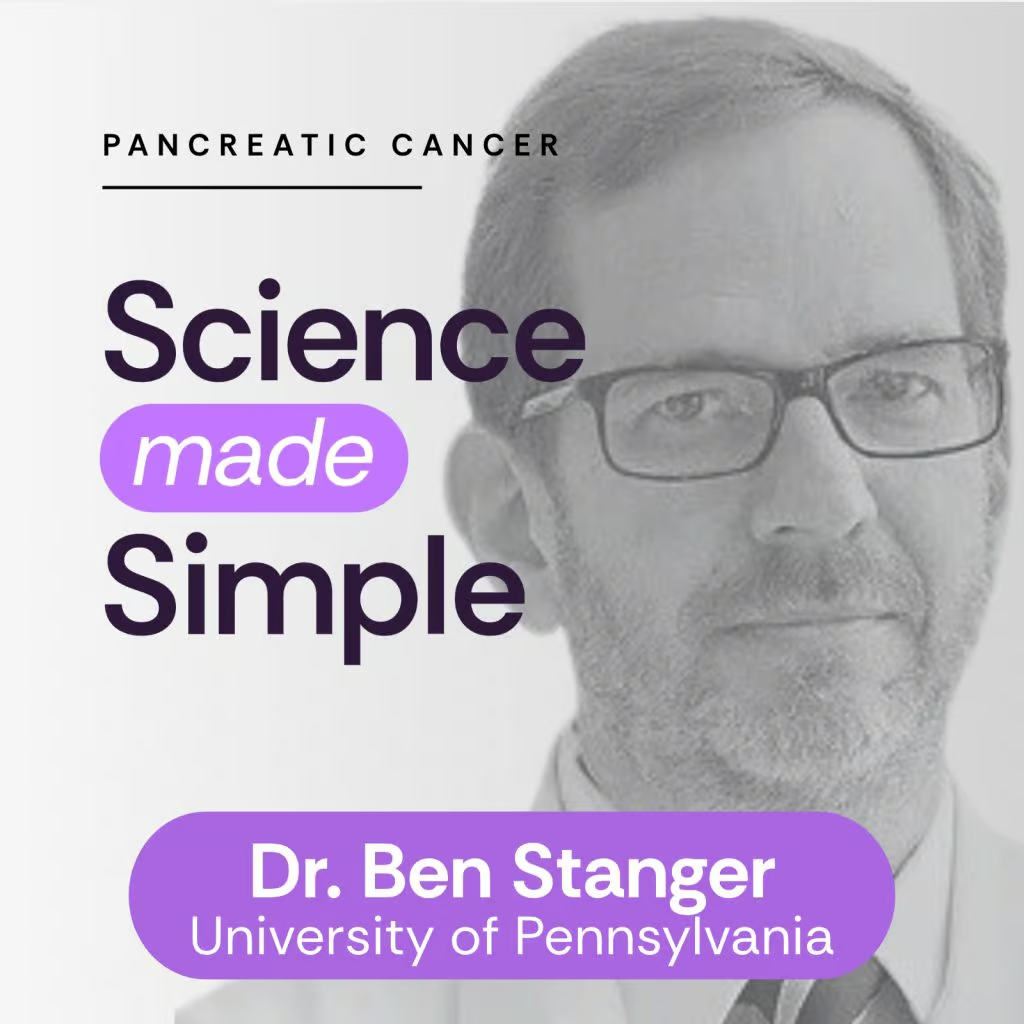
Dr. Ben Stanger, MD, PhD, is director of the Penn Pancreatic Cancer Research Center and the Hanna Wise Professor in Cancer Research at the University of Pennsylvania. A gastroenterologist and researcher, he is also a co-chair and member of ICRF’s Scientific Review Panel. His research focuses on understanding how pancreatic cancer develops, spreads, and adapts to treatment, with the goal of identifying new ways to overcome treatment resistance and improve outcomes for patients.
We asked him to share insights into pancreatic cancer that people may not know, how new treatments are changing the field, and the promising possibilities for both treating and preventing the disease.
What is one thing people often misunderstand about pancreatic cancer?
People often think pancreatic cancer is a death sentence, and that there is nothing to do after the diagnosis beyond getting one’s affairs in order. That isn’t true. Depending on the stage and biological features of the tumor, there are an increasing number of therapies that can help pancreatic cancer patients live longer and better.
Pancreatic cancer is particularly difficult to detect and treat. What are researchers learning about why this cancer behaves so aggressively, and how could that knowledge lead to better treatments?
Better treatments come from understanding the fundamental attributes that drive cancer growth. The best and most recent example is the development of KRAS inhibitors. Over several decades, the scientific community discovered that almost all pancreatic cancers have mutations in the KRAS gene as the “initiating event” that eventually leads to cancer. After many years of hard work and basic laboratory experimentation, drugs are now available that can block the cancer-causing activity of KRAS, which can significantly prolong life. One such drug was recently approved by the FDA as a treatment for pancreatic cancer.
From no KRAS drugs 10 years ago to nearly 100 now in clinical development by pharmaceutical and biotech companies, this is an example of perseverance and ingenuity overcoming what was once an insurmountable obstacle.
Your research looks at how cancer cells can change and adapt. What does “cellular plasticity” mean in simple terms, and why is it important in pancreatic cancer?
Cellular plasticity refers to the ability of cancer cells to change their molecular makeup, a form of cellular identity theft. The unfortunate reality of most cancer therapies is that cancer cells are able to develop resistance, and cellular plasticity is one of the ways they do so. This is quite different from other forms of resistance, where the cancer cell mutates so that a drug no longer works. By contrast, it is not well understood how cellular plasticity enables cancer cells to overcome therapy.
What promising area of pancreatic cancer research excites you most right now, and what gives you hope for the future?
I am most excited about KRAS inhibitors. KRAS was the first human oncogene to be identified, and members of the RAS family of genes (of which KRAS is one of three) are among the most commonly mutated oncogenes in human cancer. Until recently, there was no way to inhibit them.
Now that we know how to inhibit RAS, it’s a huge deal, not just for pancreatic cancer but for other cancers as well. For example, one-third of melanomas have mutations in NRAS, and a large fraction of lung and colon cancers have mutations in KRAS. It happens that 95% of pancreatic cancer patients have KRAS mutations, so this development is particularly impactful for pancreatic cancer.
What excites me most is figuring out how to use RAS inhibitors, probably not alone but in combination with other drugs, to hopefully start curing some patients. We can now begin to think about how to cure this cancer, which is something we couldn’t really contemplate before.
Within that bigger picture of using KRAS inhibitors to treat cancer is the idea of using them to prevent cancer, an approach called cancer interception. This is an area we’re very focused on, and the field as a whole is excited about it.
The reason is that we know the precursors to these cancers also have KRAS mutations. We’ve shown in mice that if you treat these precursors with RAS inhibitors, they go away. If you don’t have a precursor, you don’t have anything to make cancer out of.
Moving this forward into the clinic and figuring out how to deploy these inhibitors in a prevention setting, rather than a treatment setting, is what has me most excited. It’s going to be a long road, but we can at least start having that conversation.
How does being both a physician and a cancer researcher shape the way you approach your research and your care of patients?
Cancer research and cancer care are both team sports. People in the lab need to be aware of the reality in the clinic, and people in the clinic need to communicate about what’s happening in the lab. I have the privilege of having a foot in both worlds and making connections between people and ideas, which has been very fulfilling as a physician-scientist.
I’m a gastroenterologist, not an oncologist, unlike some of the other Scientific Review Panel members. That means I don’t treat cancer patients very often. I make cancer diagnoses, but I’m not a cancer doctor.
That’s been fine. My feet are in both camps, but I’m more firmly grounded in the lab. In my role as director of a pancreatic cancer research center, however, I’m very much engaged with what’s happening in the clinical trial space and with our patients. Whether or not they can participate in research, they’re going through the roughest time of their lives, and we want to remove as much friction as possible to make their experience during these difficult times better.
As a co-chair and member of ICRF’s Scientific Review Panel, what excites you most about the cancer research being conducted by scientists in Israel?
I think the concept is that we never know where the next breakthrough will come from, and Israeli science occupies a different space. The ideas are different, and the conversations are different. As members of the Scientific Review Panel, we see grant proposals that we might not see from American scientists, and that diversity of ideas is exciting and empowering.
A second thing is the excellence of Israeli science. Israeli scientists punch above their weight class and are able to do great things with limited resources. Especially now, under economic and political pressures, it’s remarkable. There’s a resilience there that’s impressive.
Read more about ICRF’s innovative pancreatic cancer research.