Israel Cancer Research Fund and Shir for Life Partner to Fund Research on the Tumor Microbiome in Neuroblastoma
The three-year Project Grant will support Ravid Straussman, MD, PhD, of the Weizmann Institute of Science, as he investigates how bacteria within neuroblastoma tumors may influence the development of this childhood cancer and its response to treatment.
New York, NY – October 14, 2026 – Israel Cancer Research Fund (ICRF) and Shir for Life have announced a new three-year, $180,000 Project Grant awarded to Prof. Ravid Straussman of the Weizmann Institute of Science in Rehovot, Israel, to study the tumor microbiome in neuroblastoma, a rare childhood cancer that develops from immature nerve cells and can be particularly difficult to treat.
The ICRF-Shir for Life Project Grant for Neuroblastoma will provide $60,000 annually for three years, with funding shared equally by ICRF and Shir for Life. The grant will be administered through ICRF’s Israel Chapter under the leadership of Tamir Gilat, Israel Chapter Chairman.
Prof. Straussman’s research, “Characterization of the Neuroblastoma Microbiome and Its Effects on the Response to Therapy,” will examine the largely unexplored role of bacteria within neuroblastoma tumors and whether they influence how the disease develops and responds to treatment. Growing evidence across cancer research suggests that tumors can function as complex ecosystems containing bacteria and other microorganisms, but little is currently known about their role in neuroblastoma.
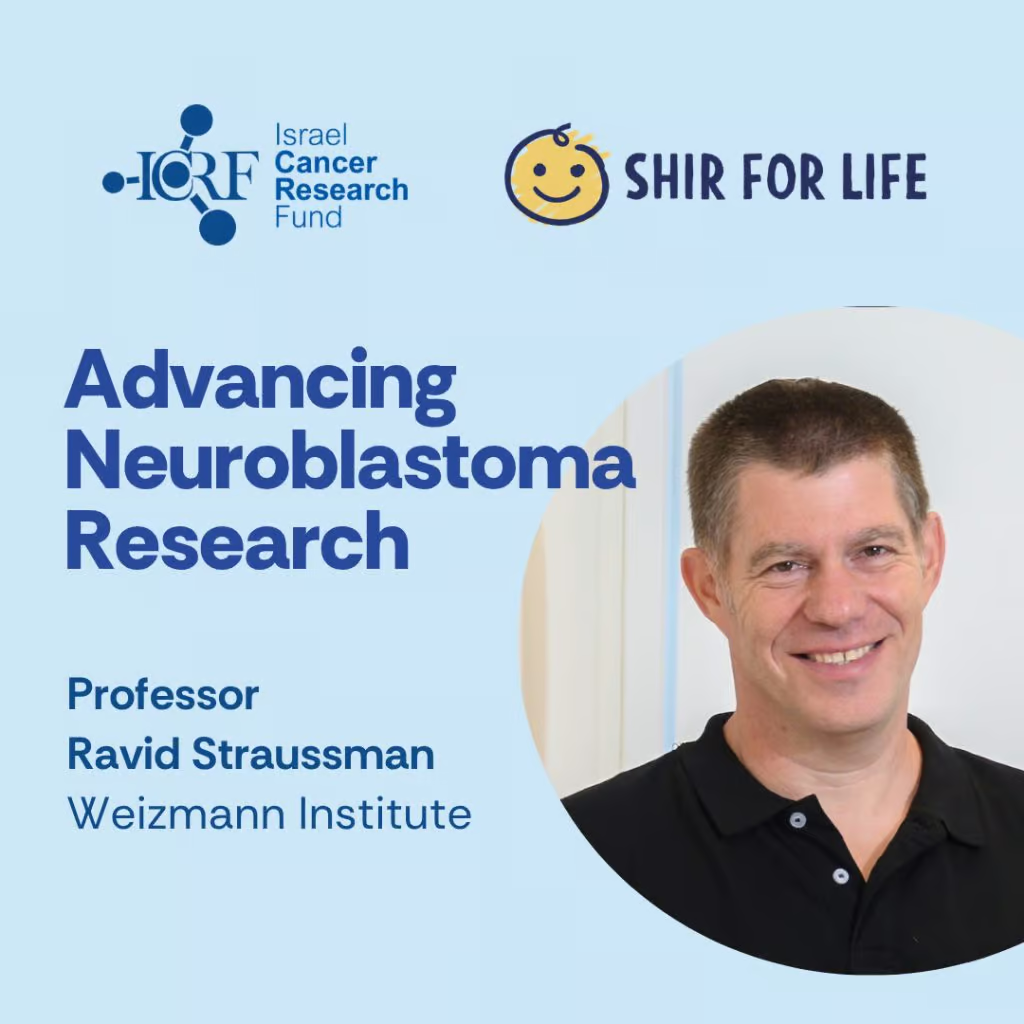
“Bacteria are part of the human body, and our lab has shown they can also be found inside many human tumors,” said Prof. Straussman. “In neuroblastoma, almost nothing is known about their presence or role. This work could open the door to new ways of improving treatment for the children and families facing this disease.”
Preliminary data from Prof. Straussman’s team indicate that the majority of neuroblastoma tumors studied contain bacteria and that the presence of these bacteria is closely associated with patient survival. Through the grant, the researchers will analyze neuroblastoma tumor samples collected from multiple hospitals, identify the bacterial species present, map their location within tumors, and examine their relationship to immune activity and clinical outcomes.
The team will then investigate whether specific bacteria can make neuroblastoma cells more resistant or more vulnerable to standard treatments, and whether targeting these bacteria could enhance the effectiveness of existing therapies.
Prof. Straussman is a leader in the emerging field of tumor microbiome research. His laboratory has demonstrated that bacteria within tumors can influence responses to cancer therapy and the tumor immune environment. His research has been published in leading scientific journals, including Science, Nature and Cell, and his work has earned multiple scientific honors.
“For families facing neuroblastoma, every unanswered question matters,” said Einat Dado Baralia, Founder of Shir for Life. “Shir for Life was created because children like Shir need more research, more collaboration and more options. By co-funding this work with ICRF, we are helping researchers in Israel explore an area of neuroblastoma biology that is still largely unknown, with the hope that new understanding can lead to better treatment strategies for children. This is exactly the kind of connection between families, science and action that Shir for Life exists to build.”
“ICRF is proud to partner with Shir for Life to advance science that addresses critical challenges in childhood cancer,” said Alan Herman, ICRF Executive Director. “Prof. Straussman’s research reflects the kind of innovative, high-impact science Israel is known for, and it has the potential to create new avenues for understanding cancer and improving treatment worldwide. By joining forces with Shir for Life, we are able to expand our investment in this important area.”
The partnership reflects a shared commitment by ICRF and Shir for Life to advancing neuroblastoma research and improving outcomes for children and families affected by the disease.
About Israel Cancer Research Fund
Israel Cancer Research Fund (ICRF) exists to power cancer research in Israel, accelerating bold ideas into lifesaving advancements worldwide. Founded in 1975, ICRF is the largest non-governmental funder of early-stage cancer research in Israel, a global leader in biomedical innovation. To date, ICRF has invested more than $100 million in research funding and supported more than 3,000 grants, with ICRF-funded scientists contributing to major breakthroughs including two Nobel Prizes, nine Israel Prizes, and three FDA-approved cancer drugs. For more information, visit www.icrfonline.org.
About Shir for Life
Shir for Life is a global nonprofit founded by Einat Dado Baralia in memory of her son Shir, who died from neuroblastoma at two years old. With deep roots in Israel and a growing international reach, Shir for Life funds neuroblastoma research in Israel and the United States, connects families directly with leading clinicians and scientists through its free international webinar series, and leads global awareness and advocacy efforts including International Neuroblastoma Awareness Day. Its work is built around a simple goal: bringing families, researchers, clinicians and partners together to create more possibilities for children with neuroblastoma. For more information, visit www.shirforlife.com.
Media Contact:
communications@icrfonline.org
212-969-9800
###
See more ICRF-related news.