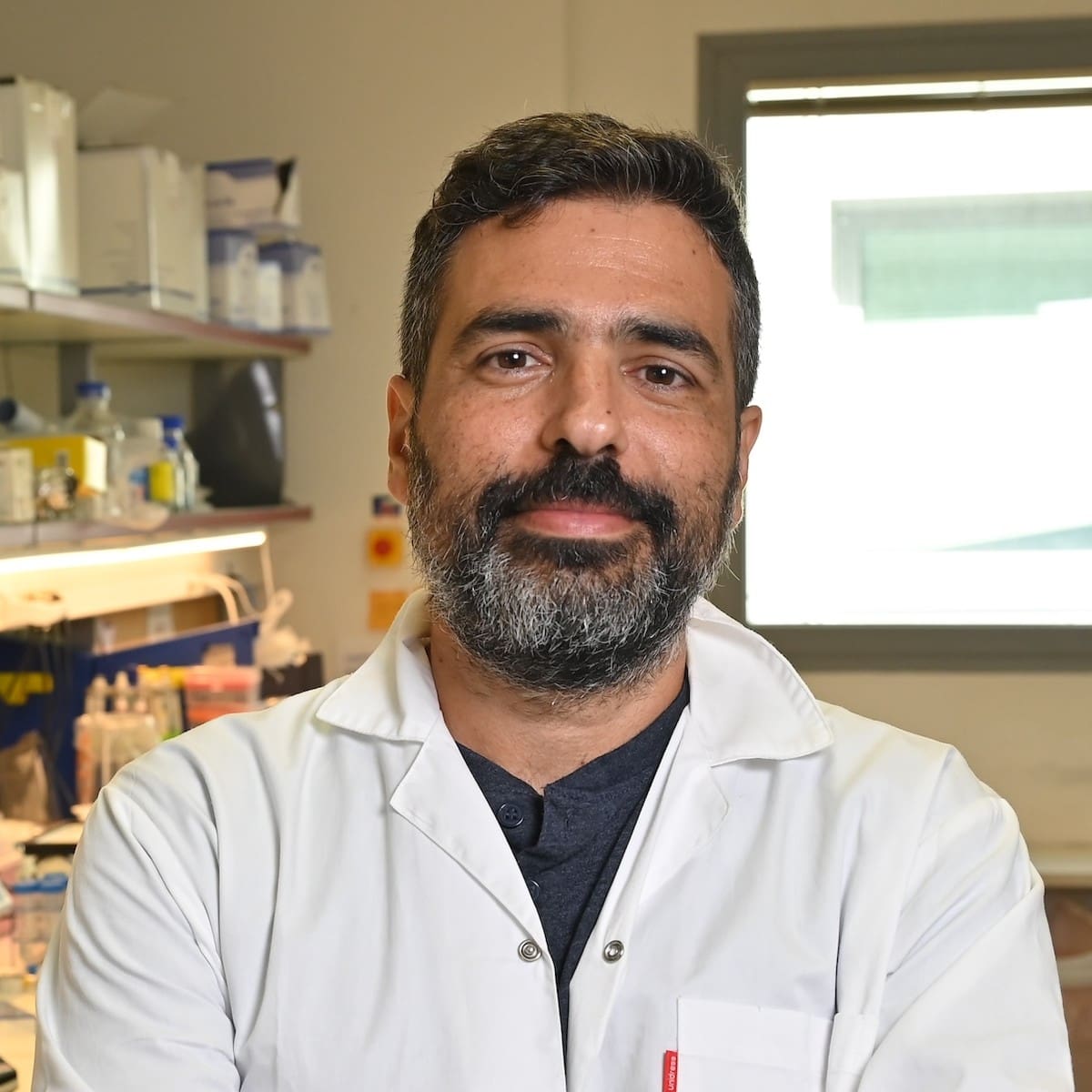
Yaakov Maman, PhD
Project Title
Decoding H. pylori "Hit-and-Run" Carcinogenesis for Gastric Cancer Diagnosis and Prevention
About the Investigator
Dr. Yaakov Maman is a principal investigator at the Azrieli Faculty of Medicine, Bar-Ilan University, studying how DNA damage and genome instability contribute to cancer development. Trained as a computational biologist, he later specialized in advanced experimental approaches du ring his postdoctoral training at Yale School of Medicine and his appointment as a Staff Scientist at the U.S. National Cancer Institute. Since establishing his laboratory in 2019, his research has focused on uncovering mechanisms that drive DNA damage and genome instability in cancer, with the goal of translating these insights into tools for cancer risk assessment, early detection, and prevention.
About the Research
Gastric cancer (GC) causes more than 700,000 deaths worldwide each year. Infection with the bacterium Helicobacter pylori (H. pylori) early in life is one of the strongest known risk factors for GC. Although antibiotics can eradicate the bacterium, cancer can still develop years or even decades later. This indicates that H. pylori leaves a long-lasting molecular signature in stomach cells, a phenomenon often described as “hit-and-run” carcinogenesis. Our recent research revealed that H. pylori directly damages the DNA of gastric epithelial cells. This damage can give rise to permanent chromosomal alterations, such as gains or losses of cancer-related genes, which persist even after the infection has cleared. Importantly, our data indicates that this genotoxic process is driven by a bacterial protein UreB, which is present in all H. pylori strains, rather than by the well-known virulence factor CagA. This distinction is critical, as most infected individuals carry CagA-negative strains.
Building on these findings, the proposed research will address three key questions: how UreB interacts with human cells to initiate DNA damage; which chromosomal alterations persist following chronic infection; and whether such early genetic changes can be detected in gastric biopsies from infected individuals before cancer develops.
By combining laboratory-based studies, genomic analysis of patient samples, this project aims to identify early genetic indicators of gastric cancer risk. In the long term, these insights may enable improved early detection and prevention strategies, particularly in the context of rising antibiotic resistance that limits the effectiveness of H. pylori eradication.





