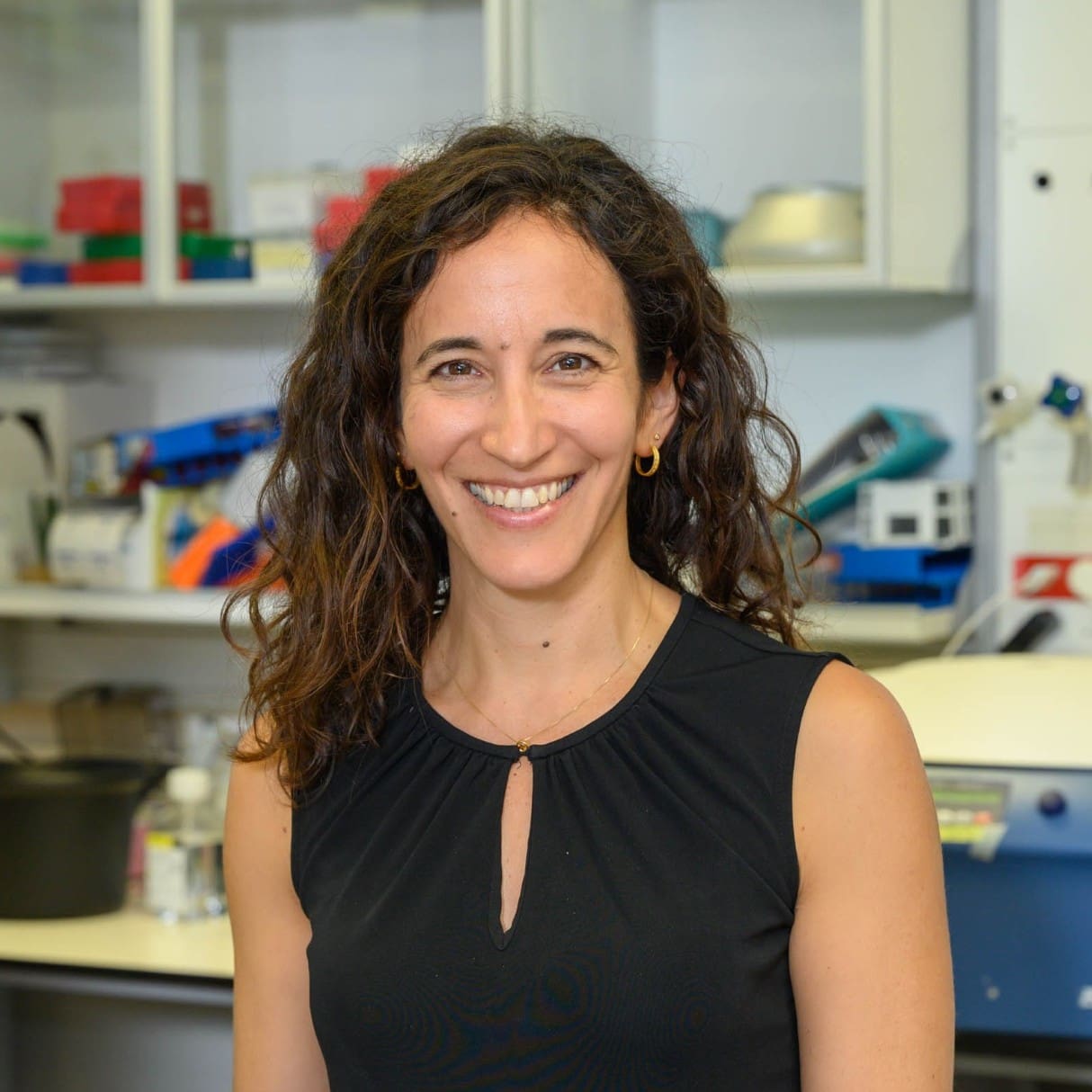
Ruth Scherz-Shouval, PhD
Project Title
Characterizing CAF-Imposed Arginine Metabolism in PDAC to Inform Treatment Strategies
About the Investigator
Ruth Scherz-Shouval is an Associate Professor at the Weizmann Institute of Science. Her research focuses on how cancer cells interact with their surrounding environment to promote tumor growth and spread. She is particularly interested in understanding how non-cancerous cells are “reprogrammed” by tumors and how these changes can be targeted to improve cancer treatment.
Dr. Scherz-Shouval’s work combines advanced mouse models, patient samples, and cutting-edge genomic and imaging technologies. Much of her research centers on fibroblasts support cells that play a major role in shaping the tumor microenvironment.
About the Research
Pancreatic ductal adenocarcinoma (PDAC) is one of the deadliest forms of cancer. One reason it is so difficult to treat is that pancreatic tumors are surrounded by a dense and complex supportive tissue known as the tumor microenvironment. This environment contains many non-cancerous cells that actively help the tumor grow and resist therapy. Among the most important of these cells are cancer-associated fibroblasts (CAFs). While fibroblasts normally help maintain healthy tissues, in cancer they are altered and begin to support tumor survival. One way CAFs do this is by changing how nutrients are used within the tumor.
This project focuses on arginine, an amino acid that is essential for immune cells to function properly and attack cancer. Emerging evidence suggests that CAFs in pancreatic cancer disrupt arginine availability, weakening immune responses and allowing tumors to escape immune control.
Dr. Scherz-Shouval and her team aim to understand how CAFs reshape arginine metabolism in pancreatic tumors, how this affects immune cells, and whether these changes can be reversed. Using mouse models, patient tumor samples, and advanced single-cell technologies, the team will identify which fibroblast populations are responsible for these metabolic changes and how they communicate with cancer and immune cells. By uncovering how CAFs limit immune activity through metabolic control, this research may reveal new treatment strategies that restore immune function and improve the effectiveness of existing therapies, including immunotherapy. Ultimately, this work seeks to identify new ways to target the tumor microenvironment rather than the cancer cells alone to improve outcomes for patients with pancreatic cancer.





