
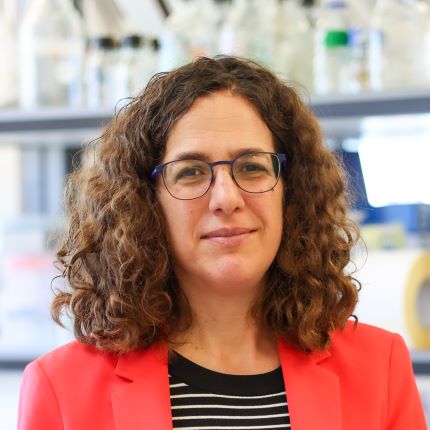
Ruth Perets, MD, PhD
Project Title
Mechanisms of Fallopian Tube Transformation and Opportunities for Ovarian Cancer Prevention
About the Investigator
Dr. Perets is a physician researcher, medical oncologist, treating women with gynecologic malignancies. Her lab is focused on understanding basic ovarian cancer mechanisms and translating them towards ovarian cancer prevention and treatment. Her research is focused on the understanding that ovarian cancer originates from the fallopian tube rather than from the ovary, and her team utilizes this understanding towards building ovarian cancer model systems and developing ovarian cancer drugs and prevention strategies. Clinically, Dr. Perets is the head of the phase 1 clinical trials in oncology in Rambam, and brings cutting edge treatments to cancer patients in Northern Israel.
About the Research
Ovarian cancer is a fatal disease largely because there are no effective methods for early detection, and as a result, most patients are diagnosed at an advanced stage when the disease is no longer curable. Understanding the earliest steps of how ovarian cancer develops is therefore critical for designing new strategies for cancer prevention and early detection.
Epidemiologic studies have shown that women with a high number of lifetime ovulatory cycles, such as women who were never pregnant or who experience menopause at a later age, have a higher risk of developing ovarian cancer. However, the biological reason for this association is unknown. In this proposal, we suggest a new mechanism that may explain how ovulation contributes to ovarian cancer development. If this hypothesis is confirmed, it could form the basis for new and effective prevention strategies.
To test this idea, we will develop a new genetically engineered mouse model of ovarian cancer that originates from the fallopian tube, which is now recognized as the tissue where most ovarian cancers begin. Using this model and complementary laboratory systems, we will evaluate a potential prevention approach based on a drug that is already widely used to treat ovarian cancer. Together, this work aims to improve our understanding of how ovarian cancer begins and to open new avenues for preventing this disease.





