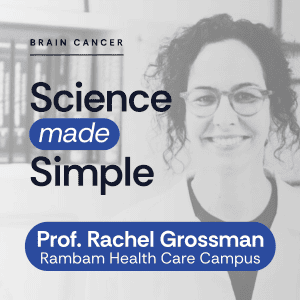
Rachel Grossman, MD

Project Title
MRI-Guided Blood–Brain Barrier Opening as a Platform for Immune Monitoring in Glioblastoma Treated with Tumor Treating Fields
About the Investigator
The investigator is a neurosurgeon and clinician scientist specializing in brain tumors, with a long-standing commitment to improving the understanding and treatment of glioblastoma. In addition to extensive experience in complex brain tumor surgery, she leads research in the brain tumor field. Her work focuses on how novel therapies influence tumor biology and the immune system, and on developing safe, innovative methods to monitor these effects in patients. By combining clinical expertise with advanced technologies, she aims to translate scientific insights into more effective and personalized treatments for patients with aggressive brain cancers.
About the Research
Glioblastoma (GBM) is the most aggressive and deadly form of brain cancer. Even with surgery, radiation, chemotherapy, and newer treatments such as Tumor Treating Fields (TTFields), most patients survive less than two years. Progress is limited by two major challenges: GBM weakens the body’s immune response, and the blood–brain barrier (BBB) prevents both treatments and tumor-related signals from easily moving between the brain and the bloodstream.
TTFields are a non-invasive therapy that uses gentle electrical fields to slow cancer cell division and improve survival. Recent research suggests that TTFields may also activate the immune system by causing a form of tumor cell death that releases immune stimulating signals. Unfortunately, these signals are difficult to detect in blood tests because the BBB blocks them from leaving the brain.
This study will combine TTFields with MRI-guided focused ultrasound, a technology that can temporarily and safely open the BBB. This brief opening allows tumor DNA fragments and immune signals to pass into the bloodstream, where they can be detected using a simple blood test, known as a liquid biopsy. Blood samples collected before and after BBB opening will be analyzed together with brain scans and clinical data. This approach will provide the first real-time, non-invasive view of how TTFields affect the immune system in patients with GBM.
In the long term, this research aims to create a blood-based method to monitor treatment response in brain cancer. Such a tool could help physicians personalize therapy earlier, guide future immune-based treatments, and ultimately improve care for patients facing this devastating disease.