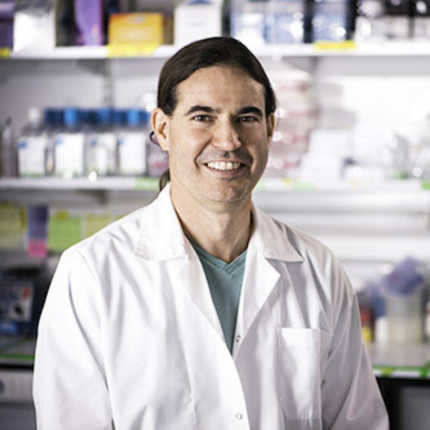
Michael Berger, PhD
Project Title
Enhancing Immunotherapy with Alanine Dehydrogenase to Mitigate Ammonia and Lactate in Solid Tumors
About the Investigator
Prof. Michael Berger is a leading researcher in T-cell metabolism and cancer who received his Ph.D. from the Hebrew University of Jerusalem and completed postdoctoral training in the laboratory of Nobel laureate Prof. Bruce Beutler. He has received funding for 15 competitive grants and published numerous peer-reviewed articles. His current work uses these findings to potentially improve the efficacy of adoptive T-cell therapy for solid tumors. With experience in project administration and strong communication skills, he is well-equipped to lead his team and drive the success of his research projects. Investing in his work offers the opportunity to be at the forefront of groundbreaking research in T-cell metabolism and to use it to improve immunotherapies for solid tumors.
About the Research
Solid tumors are challenging for our immune system’s T cells. They create a harsh, toxic environment filled with harmful substances like ammonia and lactate. High levels of ammonia directly suppress T-cell function, while normal energy balancing leads to an overload of lactate, rendering them exhausted and ineffective. This hostile “toxic soup” is why powerful immune therapies, like CAR-T cells that work for blood cancers, often fail against solid tumors. To address this, we propose to engineer these immune cells by introducing a bacterial enzyme called ALD (Alanine Dehydrogenase). This enzyme acts as a built-in detoxifier, converting toxic ammonia and pyruvate into harmless alanine while allowing the T cells to bypass the accumulation of toxic lactate. This creates “metabolically enhanced T cells” designed to endure and thrive in the challenging tumor environment. Our research will begin by confirming that the enzyme functions within human T cells and demonstrates improved performance under tumor-like stress. We will then test their ability to effectively shrink solid tumors in advanced mouse models. We will explore colorectal cancer as one key example of a solid tumor where ammonia is a limiting factor. Furthermore, because the liver is the major organ responsible for detoxifying ammonia, tumors that spread there disrupt this normal process, causing toxic ammonia to build up. As a result, solid tumors that involve or metastasize to the liver, such as pancreatic cancer, breast cancer, and uveal melanoma, should also significantly benefit from our technology. Our goal is to unlock the full potential of immune therapy for patients battling a wide range of solid tumors.





