
Liran Shlush, PhD
Project Title
A Peripheral Blood Single-Cell Platform for Diagnostic and Mechanistic Analysis of Acute Leukemias
About the Investigator
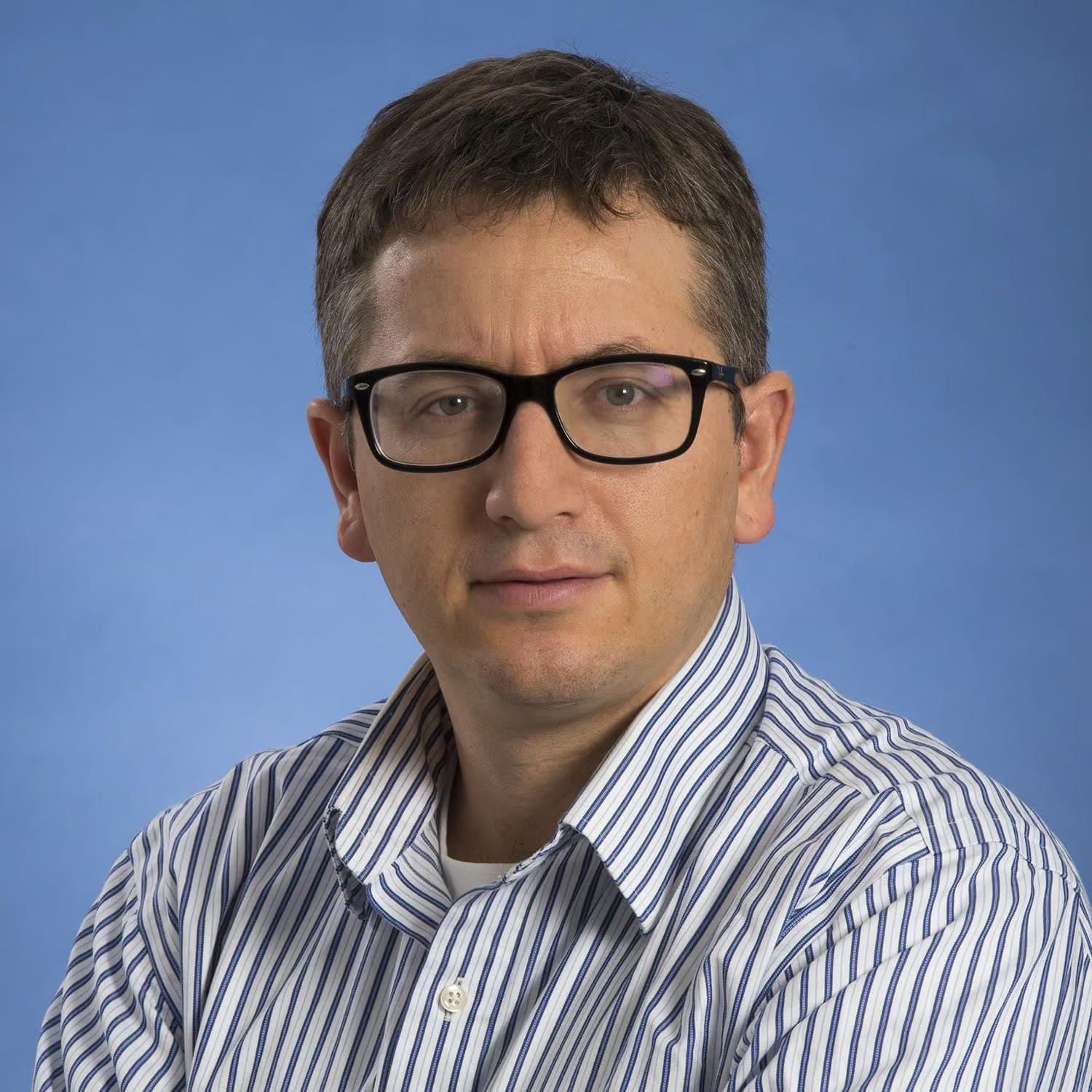
Prof. Liran I. Shlush is an Associate Professor in the Department of Molecular Cell Biology at the Weizmann Institute of Science and a practicing hematologist specializing in leukemia. His research focuses on the origins, evolution, and early detection of myeloid malignancies, with particular emphasis on clonal hematopoiesis and pre-leukemic stem cells. Prof. Shlush’s work has fundamentally reshaped understanding of AML initiation and relapse, including the discovery of pre-leukemic HSCs and the evolutionary roots of disease recurrence. His laboratory integrates single-cell genomics, population genetics, and clinical data to develop blood-based diagnostic frameworks and preventive strategies for hematologic cancers.
About the Research
Acute myeloid leukemia (AML) and acute lymphoblastic leukemia (ALL) are fast-growing blood cancers that can become life-threatening within weeks. To treat these diseases effectively, doctors must quickly identify the leukemia type and choose the right therapy. Today, this usually requires taking a painful bone marrow biopsy and performing multiple complex tests, which can delay treatment and sometimes miss important disease features. This is despite the fact that leukemia cells are often already present in the bloodstream at diagnosis.
This project aims to develop a new, less invasive way to diagnose and study acute leukemia using a simple blood sample. By applying advanced single-cell technologies, we will examine thousands of individual cells from patients’ blood to identify leukemia cells, understand how they differ from healthy blood cells, and determine how aggressive the disease is. Our work builds on recent discoveries showing that blood contains detailed and reliable information about blood-forming stem cells, providing a powerful reference for detecting cancer-related changes.
In addition to improving diagnosis, we will study how leukemia cells behave when exposed to different environments, such as growth signals or anti-cancer drugs. By tracking individual cancer cell “families” over time, we can learn how some cells survive treatment, stop normal blood development, or lead to relapse. This approach will help identify weaknesses in leukemia cells that could be targeted by new or existing therapies. In the long term, this research could reduce the need for repeated bone marrow biopsies, speed up diagnosis, allow doctors to monitor disease more easily.