
Ido Livneh, MD, PhD
Project Title
Compensatory Cancer Survival Programs Linking RTK-MAPK Signaling and the Proteasome in NSCLC and MM
About the Investigator
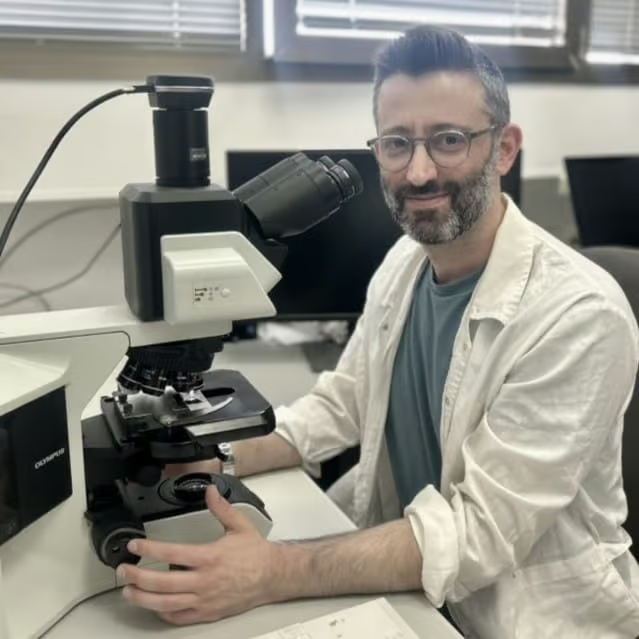
Ido Livneh is a physician-scientist and Assistant Professor at the Technion Faculty of Medicine, and a practicing pathologist at Rambam Health Care Campus. His research focuses on how cells respond to stress and what makes them vulnerable when key survival systems fail. Trained in both medicine and molecular biology, Ido studies fundamental cellular processes such as protein quality control and signaling, and how their disruption contributes to disease. His work spans cancer, neurodegeneration, and immune-related conditions, combining laboratory research with direct analysis of patient samples to translate biological discoveries into clinically relevant insights.
About the Research
Many cancers can now be controlled for long periods using modern treatments, yet most are still not cured. Patients with lung cancer or multiple myeloma often respond well to therapy at first, but the disease eventually returns. While scientists understand many genetic changes that cause treatment resistance, this does not fully explain how cancer cells survive for months or years under continuous treatment before resistance appears.
This research focuses on how cancer cells remain viable during these prolonged treatment phases. We propose that cancer cells use organized “backup” survival strategies that help them cope when their main growth-driving mechanisms are blocked. Importantly, our work suggests that pathways known to drive one cancer can act as supporting survival mechanisms in another. Specifically, signaling pathways central to lung cancer growth seem to help myeloma cells survive therapy, while protein degradation systems targeted in myeloma treatment may play an unexpected role in lung cancer survival.
To study this, we combine laboratory experiments with analyses of patient samples from both cancers. This approach allows us to test whether mechanisms identified in cells are relevant to real human cancers. By comparing lung cancer and multiple myeloma side by side, we aim to uncover shared survival strategies that would not be apparent when studying each disease alone. Understanding these survival programs could explain why cancers persist during treatment and suggest new ways to combine or repurpose existing drugs. In the long term, this work may help extend the effectiveness of current treatments and reduce the likelihood of cancer relapse.