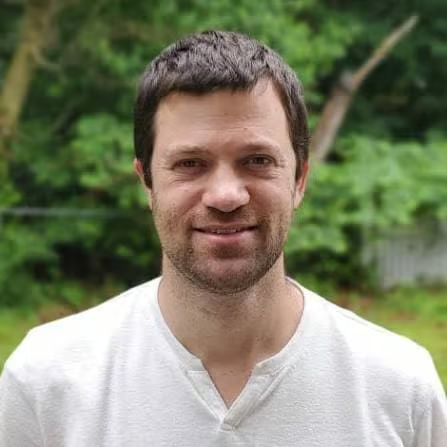
Asael Roichman, PhD
Project Title
Deciphering Diet–Microbiome Interactions that Shape Anti-Cancer Drug Pharmacokinetics and Efficacy
About the Investigator
Dr. Roichman’s research focuses on understanding how interactions between diet and gut bacteria influence the effectiveness of cancer therapy. He received his BSc and PhD from Bar-Ilan University, where he studied biochemistry and aging. After postdoctoral training at Princeton University, where he shifted his focus to cancer research, he returned to Bar-Ilan University and is now leading a research group in the Goodman Faculty of Life Sciences.
About the Research
Cancer treatments often work very well for some patients but much less effectively for others. One major reason is that people’s bodies process and clear cancer drugs differently, which can strongly influence both treatment success and side effects. Understanding why this happens is essential for improving cancer care. Our recent research shows that diet and the gut microbiome—the community of bacteria living in our intestines—play an important and previously underrecognized role in how cancer drugs are handled in the body. In animal studies, we found that certain molecules produced by gut bacteria from food components, such as compounds found in soy, can activate the liver’s drug-detoxifying systems. This can cause some cancer drugs to be broken down and cleared from the body more quickly, reducing their effectiveness. However, it is still unclear which cancer drugs are affected, whether these effects also occur in humans, and which specific microbiome-derived molecules are responsible.
In this project, we will combine studies in advanced mouse models—with a primary focus on liver and colon cancer—with analyses of human clinical data to understand how diet, gut bacteria, and commonly used antibiotics influence anticancer drug processing, and identify the microbial molecules involved. By clarifying these mechanisms, this research will help explain why patients respond differently to the same cancer treatment. Ultimately, these findings may support more personalized cancer therapy, in which diet, microbiome status, and drug dosing are better matched to each patient, leading to more effective and safer cancer treatments.